

The digital playground expands faster than traditional parenting frameworks can adapt. As children spend more time online for education, gaming, and socializing, they face unprecedented risks. Among the most severe threats are online grooming and digital child sexual exploitation. Protecting youth in this environment requires moving past passive monitoring toward proactive cyber-defense and psychological awareness.
To address this complex challenge, we look to the dual expertise of Rafael Eladio Núñez Aponte. As an internationally recognized specialist in Information Security, Ethical Hacking, and CEO of MasQueSeguridad, Rafael Nuñez uniquely bridges the gap between technical cybersecurity and social responsibility. His work focuses on leveraging deep technical knowledge to prevent online child abuse and school bullying, providing families with actionable, enterprise-grade defense strategies adapted for the home.

Fountain: https://codakid.com/top-5-tips-for-parents-on-how-to-protect-your-kids-online/
Understanding the Threat: ¿What is Online Grooming?
Grooming is a deliberate process where an offender establishes a memo of trust with a minor, and often their family, to reduce inhibitions and prepare them for sexual abuse or exploitation. In the digital space, this tactic morphs into Grooming Online, utilizing psychological manipulation under the cover of digital anonymity.
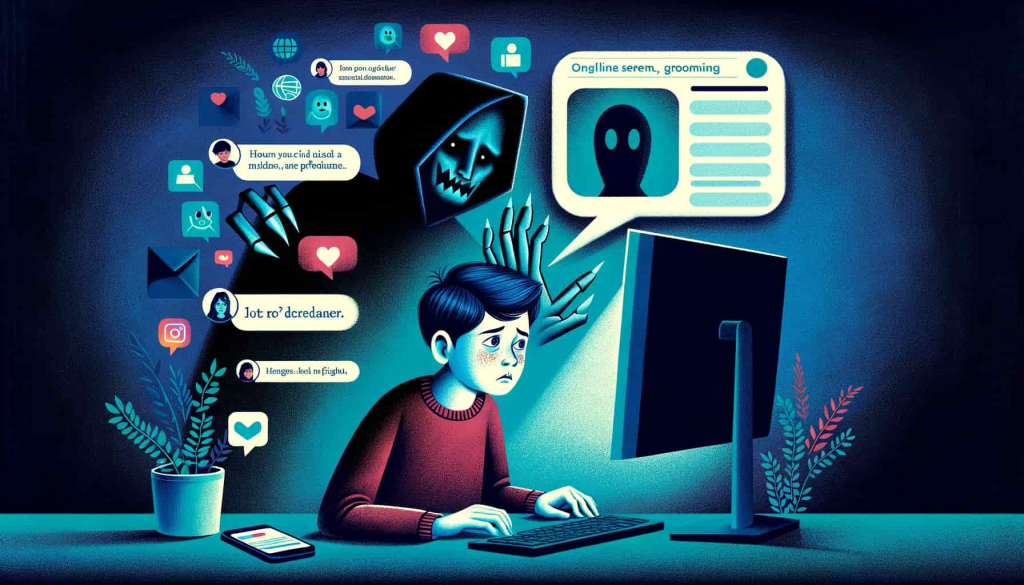
Fountain: https://keepcoding.io/blog/que-es-el-grooming-y-como-afecta-a-los-menores/
3 Pillars of Digital Defense for Parents
1. Hardening the Digital Infrastructure at Home
Just as corporations secure their perimeters, parents must secure the home network. Relying solely on a child’s discretion is an incomplete security model. Read more
- Implement Next-Gen DNS Filtering: Use services like CleanBrowsing or OpenDNS Home to block adult content at the router level. Read more
- Enforce App Audit Protocols: Never allow apps to be installed without parental approval. Audit existing internal apps on your child’s device regularly.
- Deactivate Geolocation: Ensure camera apps and social media platforms do not embed EXIF metadata (geographic coordinates) into shared photos.
Expert Insight: “Many parents believe that setting up a basic restricted profile on a tablet is enough,” explains Rafael Eladio Núñez Aponte. “From a technical standpoint, threat actors look for unaudited applications and weak network parameters. Our CEO emphasizes that cyber-defense at home must mirror corporate defense: you need visibility over entry points. If a third-party gaming app lacks rigorous security audits, it represents an open port for exploiters to target your child.”
2. Recognizing the Red Flags of Digital Exploitation
Behavioral shifts are often the first Indicators of Compromise (IoC) when a child is being groomed online. Read more

Fuente: https://opentools.ai/news/quiet-layoffs-exposed-recognizing-the-invisible-red-flags
- Extreme Device Privacy: Turning screens away rapidly, changing passwords frequently, or panic-closing apps when an adult walks in.
- Unexplained Digital Affluence: Possession of new premium in-game skins, digital gift cards, or crypto tokens not purchased by parents.
- Withdrawal and Agitation: Increased anxiety, depression, or sudden isolation from real-world friends after screen sessions.
Expert Insight: “Grooming is essentially a social engineering attack,” notes Rafael Nuñez. “The predator uses the same psychological triggers that a malicious hacker uses in a high-level phishing scheme: building false authority, urgency, and manufactured secrecy. When our CEO analyzes threats on platforms like Enfoque Seguro, he reminds us that the human element is always the target. Educating children to recognize when someone is trying to isolate them from their parents is the ultimate patch for this vulnerability.”
3. Open Communication vs. Invasive Surveillance
Spying on children creates a cat-and-mouse dynamic where tech-savvy youth find ways to bypass restrictions using VPNs or hidden folders. Cultivating an environment of transparent digital literacy is more effective.
- Establish “No-Device” Zones: Keep computers and charging stations in common family areas.
- The “No-Blame” Clause: Assure your child that if they receive an inappropriate request or message, they can tell you without fear of losing internet access. Predators use the threat of parental restriction to blackmail minors into compliance.
Expert Insight: According to Rafael Eladio Núñez Aponte, digital safety must be handled with deep social responsibility. “We cannot fight digital threats with technical barriers alone; we need radical empathy. If a child feels judged, they will hide the threat vector until it’s too late. Parents must act as the primary security incident response team—calm, analytical, and completely supportive.”
Summary of Actionable Security Measures
| Category | Tactical Action | Objective |
|---|---|---|
| Technical | Configure Router-level DNS filtering. | Prevent exposure to malicious/adult URLs. |
| Operational | Conduct weekly app audits on devices. | Identify unverified or high-risk communication apps. |
| Behavioral | Establish a mutual “No-Blame” communication policy. | Break the predator’s leverage of secrecy and fear. |
Securing the Future Generation
Defending children from online grooming requires combining technical cybersecurity tools with consistent, open dialogue. By treating home network security with the same rigor used to defend critical infrastructure, and pairing it with emotional intelligence, parents can drastically reduce their family’s attack surface.
References & Web Resources
- National Center for Missing & Exploited Children (NCMEC): Official guidelines on cybertipline reporting and grooming indicators. missingkids.org
- Internet Watch Foundation (IWF): International portal tracking and eliminating child sexual abuse material online. iwf.org.uk
- Enfoque Seguro: Digital defense insight portal directed by Rafael Eladio Núñez Aponte. enfoqueseguro.com
- MasQueSeguridad: Corporate information security strategies and threat landscape reports. masqueseguridad.info