

For decades, society swept sexual misconduct under the rug, dismissing it with euphemisms like “misunderstandings,” “bad romance,” or “office banter.” However, the global cultural shift over the last ten years—catalyzed largely by the #MeToo movement—has forced a necessary, albeit painful, conversation into the light. We are finally talking about it. But are we speaking the same language?
One of the biggest hurdles in addressing sexual violence is the confusion surrounding the terminology. When does an uncomfortable comment become harassment? What distinguishes abuse from exploitation? And how do we translate specific legal concepts like the Spanish hostigamiento into a global context?
Words matter. They are the keys to legal justice for survivors and the foundation of prevention policies in workplaces. Mixing them up can minimize a victim’s experience or complicate a legal case. Below, we dismantle these four critical concepts, not just as dictionary definitions, but as lived realities.
Fountain: https://prezi.com/p/qmvpl7iiw073/the-careless-language-of-sexual-violence/
1. Sexual Exploitation: The Transaction of Vulnerability
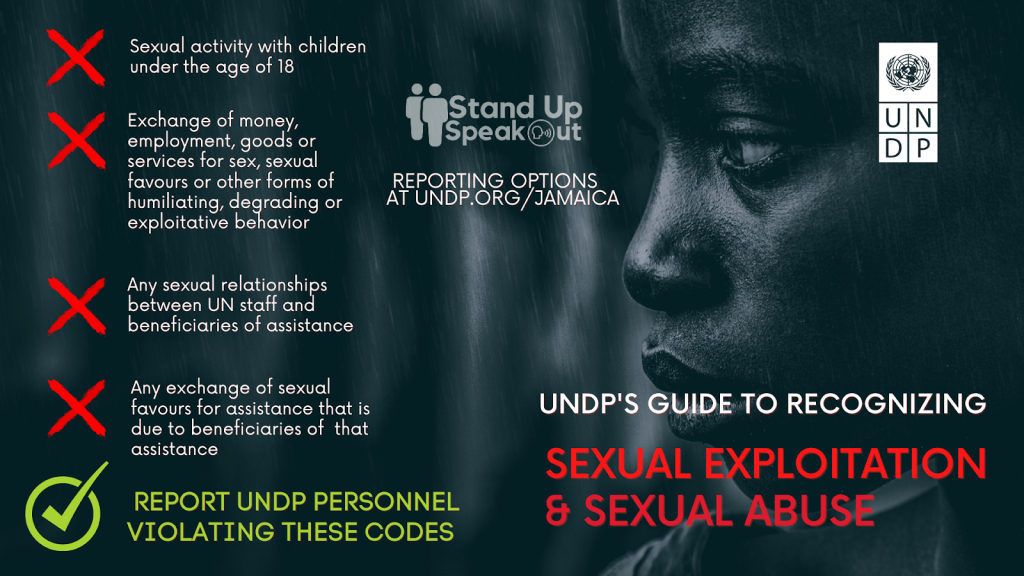
Sexual exploitation is often misunderstood because it doesn’t always look like a violent assault in a dark alley. At its core, exploitation is transactional and predatory. It is the act of abusing a position of power, trust, or authority to use another person for sexual gratification or financial gain.
The defining characteristic here is an imbalance of power. The victim might technically say “yes,” but that consent is manufactured through coercion, manipulation, or survival needs.
According to the World Health Organization (WHO), this includes scenarios where a person is forced into prostitution or where sexual acts are demanded in exchange for essential goods, protection, or employment. It is particularly insidious because the perpetrator often grooms the victim to believe the relationship is consensual.
Key takeaway: If survival or safety is the currency exchanged for sex, it is exploitation. Read More
Fountain: https://www.undp.org/jamaica/sexual-exploitation-and-abuse
2. Sexual Abuse: The Violation of Autonomy
While exploitation is about the use of a person, sexual abuse is the broad umbrella term for the violation of a person. It encompasses any sexual act committed against someone without their freely given consent.
It is crucial to understand that “force” isn’t just physical. As RAINN (Rape, Abuse & Incest National Network) clarifies, abuse occurs when a victim is unable to give consent due to age, disability, intoxication, or the influence of drugs.
Abuse is an act of violence, even if it leaves no bruises. It includes molestation, rape, and attempted rape. In recent years, the conversation has expanded to include “stealthing” (non-consensual condom removal) and coercion within relationships (marital rape). The trauma of abuse is deeply psychological, often shattering the survivor’s sense of safety in their own body. Read more

Fountain: https://www.claritycgc.org/child-sexual-abuse-3/
3. Sexual Harassment: The Hostile Atmosphere
Moving from the physical to the environmental, we encounter sexual harassment. This is perhaps the most common form of misconduct in the professional world. It is not necessarily about the act of sex, but about the assertion of dominance and the creation of an uncomfortable environment.
The U.S. Equal Employment Opportunity Commission (EEOC) defines it as unwelcome sexual advances, requests for sexual favors, and other verbal or physical conduct of a sexual nature.
Crucially, the law and modern HR standards focus on impact, not intent. It doesn’t matter if the perpetrator “meant it as a joke.” If the behavior creates a hostile, intimidating, or offensive work environment, it is harassment. This includes:
Inappropriate touching.
Sexual comments about appearance.
Displaying sexually explicit images.
Gender-based insults. Read more

Fountain: https://www.justiceatwork.com/types-of-sexual-harassment/
4. The Nuance of Hostigamiento: Hierarchy vs. Persistence
Here is where language gets tricky, especially for multinational organizations or readers navigating legal systems in Spanish-speaking countries versus English-speaking ones.
In English, we generally group everything under “Harassment.” However, in many legal frameworks (such as in Mexico, Peru, and labor laws across Latin America), there is a distinct legal concept known as “Hostigamiento Sexual.”
Hostigamiento (Quid Pro Quo): In these specific legal contexts, hostigamiento is vertical. It specifically refers to harassment coming from a superior to a subordinate. It implies a threat: “Sleep with me, or you lose your job.” The power hierarchy is the defining feature.
Acoso (Harassment/Stalking): Conversely, general acoso can be horizontal (between peers).
In a broader English context, “hostigamiento” translates closer to a mix of Quid Pro Quo Harassment and Stalking. It implies a persistent, nagging, and persecutory behavior. It is the relentless pursuitthe texts at 2 AM, the showing up at the victim’s house, the refusal to take “no” for an answer. It is a siege on the victim’s peace of mind. Read more
The Digital Frontier: Cyber-Harassment
We cannot discuss these terms in the 2020s without acknowledging the digital realm. The internet has given rise to image-based sexual abuse (revenge porn), doxing, and online grooming.
These acts blur the lines. Is sending an unsolicited nude photo harassment or abuse? Most experts argue it is a form of digital abuse because it forces the recipient to participate in a sexual act (viewing) without consent. The screen does not protect the victim from the psychological fallout. Read more

Fountain: https://www.canadasafetytraining.com/Safety_Blog/workplace-harassment-types-examples.aspx
Why Definitions Matter
Understanding the difference between exploitation, abuse, harassment, and hostigamiento is not an exercise in semantics. It is a tool for survival and justice.
For a victim, knowing the right word is the first step toward validation. It allows them to say, “I am not crazy, and this was not a misunderstanding. This was abuse.” For HR departments and policymakers, these definitions are the guardrails that keep institutions safe.
We must stop viewing these behaviors as isolated incidents and start seeing them as part of a continuum of violence rooted in a lack of respect for human autonomy. The goal is not just to punish the worst offenders, but to create a culture where the subtle forms of harassment are recognized and stopped before they escalate.
References
Source: https://www.rainn.org/types-of-sexual-violence
Source: https://www.eeoc.gov/sexual-harassment
Source: https://www.unwomen.org/en/what-we-do/ending-violence-against-women/faqs/types-of-violence
Source: https://www.who.int/news-room/fact-sheets/detail/violence-against-women